
A Beginner's Guide to Car Hauling: Tips for Independent Owner-Operators
So you're thinking about getting into car hauling? Good choice. The work is steady, the money's decent, and there's always demand. But I get it—when you're just starting out, it can feel like a lot to figure out.
Why Car Hauling Makes Sense
Look, people need their cars moved. Dealerships need inventory shuttled around. Auction houses need vehicles transported. The work isn't going anywhere, and if you're reliable, you'll stay busy.
Equipment: Buy or Rent?
Here's where most people trip up right out of the gate. A new trailer can run you anywhere from $30,000 to $100,000+. That's a huge chunk of change when you're not even sure if this is for you yet.
Renting makes way more sense when you're starting out. Lower upfront costs, no maintenance headaches, and you can actually test the waters before diving in.
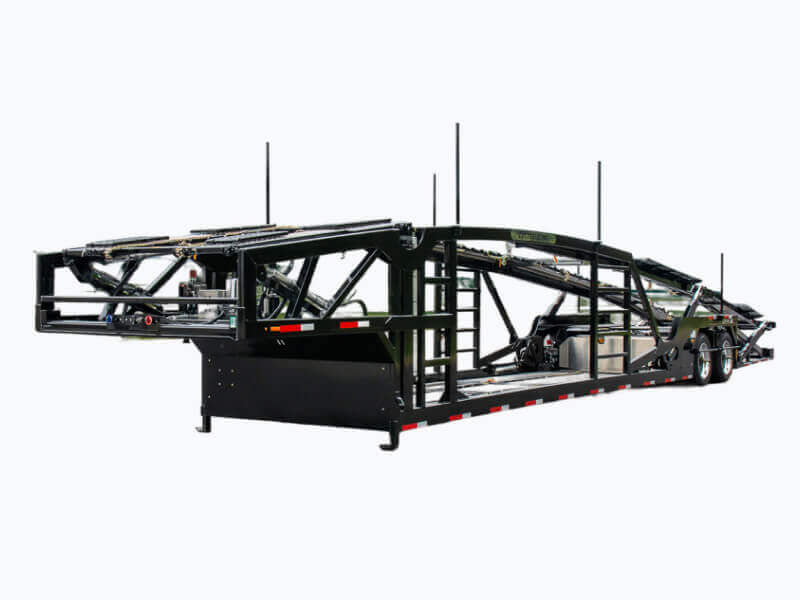
The Wedge vs. Flatbed Mistake
Don't buy a flatbed thinking you'll "haul cars on the side." You can't make money hauling 2 cars on a 40-foot flatbed unless they're Ferraris—and you won't get those loads yet.
If you're running a hotshot setup, start with a 3-car wedge trailer or a 5-car mini-hauler. That's the industry standard for a reason.
And if you're thinking about using a Ram 5500 or F-450 dually? Understand that you're not driving a semi. You will burn through transmissions and rear differentials if you treat your pickup like a Peterbilt. Budget for a transmission rebuild in your first year. It's not a matter of if, but when.
When you're looking at trailers, whether renting or buying, here's what matters:
The capacity needs to match what you're hauling. Don't assume one size fits all—different cars mean different weights and sizes. Good ramps and tie-down points aren't optional, they're essential for keeping you and the vehicles safe. And maintenance matters. A trailer that's always breaking down means you're not making money.
If you want to check out some solid rental options, take a look at what we've got.
The Stuff Nobody Tells You to Buy
A CDL and a truck are not enough. If that's all you have, you'll quit in two weeks. Here's the gear that keeps you working when things go sideways:
30 pairs of gloves. You're not driving a dry van. You're chaining, strapping, and inspecting dirty cars in the rain. Buy cheap, buy bulk, and throw them out weekly.
Real rain gear. When you're loading a lifted truck on the top deck in a thunderstorm, a poncho is useless. Get full bibs—Helly Hansen or Grundéns. Not just a jacket.
A height stick. "I think it fits" is a $10,000 mistake. If you've got an SUV on the top deck, you're essentially a moving bridge strike waiting to happen. Know your height to the inch.
Understanding the 3-foot rule. A car hauler pivots differently than a standard 53-foot trailer. Your pivot point is often 3 feet behind the back axle. If you turn like a dry van driver, you will clip fenders.
The Regulation Reality
Yeah, I know, paperwork and inspections aren't fun. But the FMCSA doesn't mess around, and neither should you. Your trailer needs to meet DOT standards, you need the right licenses, and you need proper insurance. That's just the cost of doing business legally.
Before you hit the road, your trailer's going to need to pass inspection. Here's what they'll be looking at:
Your brakes need to work, obviously. They'll check for leaks, worn pads, damaged lines—the whole system. Same with tires: they need good tread, no cracks in the sidewalls, proper pressure, tight lug nuts. All your lights have to work too: headlights, taillights, brake lights, turn signals, clearance lights. Everything.
They'll check your steering and suspension for any play or looseness, damaged linkage, worn shocks. The electrical system can't have corroded wiring or bad connections. Fuel lines and exhaust need to be leak-free and properly mounted. And cargo securement? That's a big one. Everything you're hauling needs to be tied down properly so it doesn't shift around.
Here's the good news: when you rent from us at Freight & Auto, all of this is already taken care of. Our trailers are inspected and maintained regularly. They're DOT-compliant and ready to go. You're not inheriting someone else's maintenance problems or scrambling to fix issues before an inspection. The trailer shows up ready to work, and you can focus on actually making money instead of dealing with compliance headaches.
The First 60 Days: The Valley of Death
Everyone talks about the high rates and the $1M+ revenue potential. Nobody talks about the "Valley of Death" in the first two months.
The insurance hit: For a new authority in 2025, don't expect a monthly payment plan immediately. Many insurers now demand 20-30% down upfront. That can be $4,000-$6,000 cash before you even turn the key.
The Net-30 trap: Brokers pay in 30 days. Fuel stations demand payment now. If you burn $1,500 per week in diesel, you need $6,000-$8,000 in operational savings just to float yourself until that first broker check clears.
This is the cash flow gap that kills new operators. You can have the best equipment and the best loads, but if you don't have this cushion, you will fail. Not might—will.
And if you can't handle the gap? You'll end up factoring every load. That eats 3-5% of your profit right off the top, which means you're working harder for less money from day one.
Don't Try to Do Everything Yourself
Look, I get it. When you're starting out, you want to keep costs down. So you figure you'll handle your own dispatching, or maybe your spouse can do it. Seems like an easy way to save some cash, right?
Wrong.
First off, trying to negotiate with brokers while you're driving is dangerous. You're literally violating safety regulations and putting yourself and others at risk. And when you're focused on the road—like you should be—you can't properly evaluate loads or negotiate rates. You end up taking whatever's available instead of what's actually profitable.
And having your spouse do it? That sounds good on paper until it starts eating into your personal time and causing tension at home. Trust me, mixing family and business logistics rarely works out the way you think it will.
Here's the reality: brokers want to work with professional dispatchers. People who know the terminology, understand the market rates, and are available during business hours. They have relationships. They know how to negotiate. They can get you better-paying loads and more efficient routes.
Your job is to drive safely and deliver on time. Let someone who knows what they're doing handle the rest. A good dispatcher pays for themselves pretty quickly through better rates alone.
How to Not Wreck Your Cargo (And Your Reputation)
Loading Without Destroying Anything
New drivers are terrified to load a car backward. But on a wedge trailer, you often have to load the top car in reverse to keep the weight forward and the roofline low. If you don't understand weight distribution—keeping heavy EVs between the axles—you will get the "death wobble" at 65mph. Learn this before you get on the highway.
The strap game: Be careful cranking down straps on vehicles with low-profile tires. You can deform the sidewall, the strap comes loose 50 miles later, and now you have a loose Mercedes bouncing on your trailer.
The "Run & Drive" Lie
A broker will tell you a car is "Run & Drive" (R&D). You show up, and it has no keys, a dead battery, and three flat tires.
Always carry a NOCO jump box and a winch. Never assume a car will start. If you have to winch it, that's an extra fee—put it on the Bill of Lading (BOL) before you leave.
Height and Parking
You think you know how tall your load is? You don't. SUVs bounce. Suspensions settle. Buy a fiberglass height stick and measure every single load before you leave the lot. Hitting a bridge isn't an "accident"—it's negligence, and it will permanently uninsure you.
Parking strategy: Never park in the middle rows of a truck stop. You're longer, lower, and wider than a standard rig. Park on the perimeter or the back row.
Tree trimming: You aren't just watching for bridges. Low-hanging oak trees in residential delivery areas cause more damage to roof-loaded cars than bridges do. If it looks tight, don't risk it. Unload the car on the main road and drive it in.
The Tool Stack You Actually Need
Generic advice says "use load boards." Here's what you actually need and how they really work:
Central Dispatch: The Reality
This is the Bible of car hauling. 90% of the cars move here. If you aren't on Central, you don't have freight. But it's not as simple as clicking "book."
It's a contact sport. You don't just click and go. You have to call, negotiate, and verify. Every time.
Verify every broker. In 2025, double brokering is rampant. If a broker has a credit score below 95 or has been in business for less than 6 months, proceed with extreme caution.
The "INOP" lie. If a listing says "Runs and Drives," assume it doesn't. Always ask: "Does it start right now, and does it have a key?" If you show up and it's a forklift load, you need the right equipment or a cancellation fee.
SuperDispatch
Throw away paper BOLs. Use this app to take 15+ photos of every car at pickup. Why? Dealers will blame you for scratches that were already there. If you didn't photo it, you bought it.
Trucker Path
You cannot take a 75-foot rig through a drive-thru. Use this to find truck-accessible fuel and parking.
Where the Real Money Is
The money isn't in hauling used Camrys for CarMax. Once you know what you're doing, the veterans focus on the "pain in the neck" loads that most drivers refuse:
INOPs (non-runners). If you have a winch and know how to use it, you can demand higher rates because 50% of drivers will refuse the load.
Enclosed transport. Higher barrier to entry, but recession-proof clients. People shipping Ferraris don't care about the economy—they care about rock chips.
Snowbirds. The Florida-to-Northeast run during season changes is a gold mine, but you have to book months in advance.
These aren't beginner loads. But once you've got experience and the right equipment, this is where you stop working for pennies and start actually making money.
Getting Started
Car hauling isn't rocket science, but it's not something you should just wing either. Get the right equipment (or rent it while you're learning), make sure you're compliant with regulations, work with people who know what they're doing, and understand the financial reality before you jump in.
At Freight & Auto, we rent trailers to owner-operators and provide dispatching services. If you're just getting started and want to avoid some of the common mistakes, we're worth talking to.